Thursday, September 30, 2010

Wednesday, September 29, 2010
September Log Post 1 (9/27 and 9/28)
On Monday the 27th I gathered additional photographs for my background information. These were pictures of the different ROV tasks, HUGO, the cave, the vent, and the bacterial mat. I also worked on re-formatting my blog to make it easier to navigate. On Tuesday the 28th I did additional work on my background information and on my alternate solutions. For my background information I added in additional information about the people involved in the project. For my alternate solutions I re-formatted the post and added in an introduction and conclusion for my write up.
Friday, September 24, 2010


Information on Alternate Solutions
For the MATE ROV competition my group is tasked with designing a multi-functional ROV capable of transporting objects, determining sound and temperature readings, and manipulating seals and locks. The ROV will be operated in a clear, lit test pool of between 1.2 and 4 meters deep. My individual portion of this task is the mechanical engineering component. I am to design the manipulator for the ROV that must pick up, carry, and drop various objects throughout the pool. It must also not impede the motion of the ROV. These are my three alternate solutions for the manipulator of the ROV.
My 1st alternate solution is a horizontal claw system. It has one pincer like claw coming off of either side of the arm. The arm is straight and rectangular in shape in order to fit into Sean’s hull design. It utilizes a tooth arm and gears in order to function. There is one 1” gear and one pincer has a 1/8” gear, while the other has a ½” and ¼”. The arm will be 6 inches long. Each claw will be 2 inches long. The claw will be composed of plastic and will use a pneumatic power system to power it.
My 2nd alternate solution is a modified version of the horizontal claw system. It has a pincer-like claw on each side of the arm, but it has a top and bottom set in order to create a cage as well. There will be bars running from top to bottom in order to enclose the cage. This will allow the ROV to grab and hold on to objects more easily. Once again the arm is straight and rectangular in shape to accommodate Sean’s hull design. It utilizes a tooth arm and gears to function. There is one 1” gear and one pincer has a 1/2” gear, while the other has a ½” and 1/2”. The arm will be 6 inches long. Each claw will be 2 inches long and the bars that form the cage will be 2 inches tall. The claw will be composed of PVC piping and will be powered using an electric motor.
My 3rd alternate solution is a vertical claw system. It is similar to the horizontal system, although it is in a different position and has different gear ratios. It has a claw coming off the top and bottom of the claw arm. Once again the arm is straight and rectangular in shape to accommodate Sean’s hull design. The claw will come together to encase the object on the top and the bottom. The gear ratio will not be equal and will allow the bottom claw to move faster than the top claw. This is so that the bottom can scoop up the object quickly and then have the slower top claw come down and close on top of it. The arm will be 6 inches long. The claws will be 2 inches long each. The claw and arm will be composed of PVC and will use an electric motor to power it.
In conclusion, each soltution can meet the requirements of the ROV, although one must be chosen. Each solution is a completely different design that can complete the same task. My 1st solution is the horizontal claw system, the second is the vertical claw system, and the third is the modified horizontal cage system. Each design must be able to complete its tasks, while also not impeding the motion of the ROV.
In conclusion, each soltution can meet the requirements of the ROV, although one must be chosen. Each solution is a completely different design that can complete the same task. My 1st solution is the horizontal claw system, the second is the vertical claw system, and the third is the modified horizontal cage system. Each design must be able to complete its tasks, while also not impeding the motion of the ROV.
Tuesday, September 14, 2010
Design brief, specs, and limits
Team Design Brief
Design a multi-functional ROV capable of transporting objects, determining sound and temperature readings, and manipulating seals and locks. The ROV will be operated in a clear, lit test pool and be able to submerge to a maximum depth of four meters.
Individual Design Brief
Design a manipulator used to pick up, carry, and relocate items within a swimming pool, while not impeding the motion of the ROV.
Specifications
ROV must operate in fresh, chlorinated water
ROV must submerge to a maximum depth of 4 meters
Has to be remote controlled with a tether connected to the ROV
Must have a direct camera feed to the operators
Must create as little water friction as possible through the pool
Must be able to pick and place objects throughout the pool at the competition site.
Must be easily operated by high school students from the view of an underwater camera mounted on the hull of the ROV
Must be operable while minimally altering the chemical composition of pool water through lubricants such as oils, greases, etc.
Must have an operable and functioning electrical system
Must be confined to one power source
Must have a pliable and lengthy tether connected to the power source and controls
Propulsion must be electrical, hydraulic, or pneumatic; if hydraulic or pneumatic power must come from the MATE power supply
Manipulator must be able to transport objects without damaging the manipulator/object
Manipulator must operate on either electrical, hydraulic, or pneumatic power
ROV must be able to balance itself in the water without human interaction
All equipment must function to complete the assigned tasks
The claw must be able to open to 4 inches
Other specifications will be assigned once the tasks are assigned in Mid-November
Limits
ROV must be completed during the school year
ROV must be a manageable size that can easily be transported to the competition and complete the tasks
ROV and monitors must operate on a 12 volt and 25 amp system
ROV must be made out of a non corrosive material
Transformers may not be used
The maximum PSI for pneumatic power is 40 PSI
The pneumatic power system must be rated for at least 100 PSI
The maximum PSI for hydraulic power is 150 PSI
The hydraulic power device must be rated for at least 300 PSI
Other limitations will be assigned once the objective is told to us in Mid-November
Design a multi-functional ROV capable of transporting objects, determining sound and temperature readings, and manipulating seals and locks. The ROV will be operated in a clear, lit test pool and be able to submerge to a maximum depth of four meters.
Individual Design Brief
Design a manipulator used to pick up, carry, and relocate items within a swimming pool, while not impeding the motion of the ROV.
 |
| The pool for the MATE competition with an ROV manuevering through the pool. http://deepseanews.com/wp-content/uploads/2009/07/IMG_10871-1024x768.jpg |
Specifications
ROV must operate in fresh, chlorinated water
ROV must submerge to a maximum depth of 4 meters
Has to be remote controlled with a tether connected to the ROV
Must have a direct camera feed to the operators
Must create as little water friction as possible through the pool
Must be able to pick and place objects throughout the pool at the competition site.
Must be easily operated by high school students from the view of an underwater camera mounted on the hull of the ROV
Must be operable while minimally altering the chemical composition of pool water through lubricants such as oils, greases, etc.
Must have an operable and functioning electrical system
Must be confined to one power source
Must have a pliable and lengthy tether connected to the power source and controls
Propulsion must be electrical, hydraulic, or pneumatic; if hydraulic or pneumatic power must come from the MATE power supply
Manipulator must be able to transport objects without damaging the manipulator/object
Manipulator must operate on either electrical, hydraulic, or pneumatic power
ROV must be able to balance itself in the water without human interaction
All equipment must function to complete the assigned tasks
The claw must be able to open to 4 inches
Other specifications will be assigned once the tasks are assigned in Mid-November
Limits
ROV must be completed during the school year
ROV must be a manageable size that can easily be transported to the competition and complete the tasks
ROV and monitors must operate on a 12 volt and 25 amp system
ROV must be made out of a non corrosive material
Transformers may not be used
The maximum PSI for pneumatic power is 40 PSI
The pneumatic power system must be rated for at least 100 PSI
The maximum PSI for hydraulic power is 150 PSI
The hydraulic power device must be rated for at least 300 PSI
Other limitations will be assigned once the objective is told to us in Mid-November
Monday, September 13, 2010


Testing Procedures
Introduction
The ROV is expected to be able to transport objects, determine temperature and sound readings, and manipulating seals and locks. It will operate in a clear, lit pool and must be able to submerge to four meters in depth. The manipulator is expected to be able to pick up, carry, and relocate objects within the pool, while not impeding the motion of the ROV. The ROV must be able to operate in fresh, chlorinated water; therefore it must be sealed in order to be waterproof. The manipulator must create as little friction in the water as possible; it must also be confined to one power source. If using hydraulic or pneumatic it must come from the MATE power supply. The manipulator must also be able to open to four inches and complete all assigned competition tasks. Four systems in total will be tested. We will need to test the hull, electrical system, the manipulator, and the ROV as a whole. The people involved in testing will be myself, Ryan van Doorn, Sean Coppinger, and possibly our mentors if they are available. We have three possible locations for testing to be conducted. They are the systems lab at the Marine Academy of Science and Technology, the Coppinger’s pool, or the van Doorn’s pool. We can do any dry testing at MAST systems lab, while if we need a pool we can test at MAST or at one of the previously described pools. The atmosphere will remain serious in order to ensure the accuracy of the tests.
Expectations
The ROV is expected to be able to perform basic functions and be able to do certain things in a certain environment. The ROV is expected to be able to operate in fresh, chlorinated water and be able to submerge to a depth of at least 4 meters. The ROV must also create as little friction as possible. The manipulator must also be able to pick up and relocate items within the competition pool. The ROV must be powered via an electric motor, hydraulic power, or pneumatic power. The manipulator must also be able to relocate items in the pool without damaging itself in the process. The manipulator also needs to be able to open up to at least 4 inches wide.
Exploratory
Exploratory testing is conducted in the beginning of the development process. It is used to explore the potential of possible design ideas. It answers questions about functionality, user preference, and requirements. It involves determining the needs of the users and evaluating the basic designs. At this point I was brainstorming possible alternate solutions for the manipulator. I chose the three different alternate solutions, the vertical, the horizontal, and the modified horizontal systems. I also explored different options for materials, such as plastic, pvc, wood, and metal. I also explored different systems of powering the manipulator, such as pneumatic, hydraulic, and an electric motor.
Assessment
Assessment testing is the next level of design testing. It aims to test the appropriateness of a few different preferred solutions. Through this testing you are looking to assess finer design concepts of your solutions. For this stage of testing you are insuring that the concept is usable, that it fits the user needs, can the solutions be improved, and is it able to complete the intended tasks. This stage of testing involved further scrutinizing my three solutions, where I looked over the pros and cons of each. This involved creating a design matrix so I could assess how effective the different solutions were, based on the specifications.
Validation
Validation tests are conducted at the end of the design process to ensure that all of the design goals have been met. These tests aim to assess functionality and performance, as you would want for the final product. Full tests are completed and not just walkthroughs. The test item should as nearly represent the final product as possible to ensure the most accurate tests. These tests are the actual tests where you would validate the functionality of your actual design. For the claw these include, testing that it can successfully pick up and relocate items within the pool or testing to see if the claw can open to 4 inches. These tests ensure that your final design meets all of the specifications.
Comparative
Comparative tests can be used at different points in the design process. They are used to compare one viable solution with another. It is used to determine preference and superiority of different items. Comparative testing helps the user to choose one solution from a group of solutions. Specifically for my part of the project this included the design matrix with my three alternate solutions. I used my specifications like bench marks and evaluated each solution on a scale of one to ten. This allowed me to directly analyze the strong and weak points of each of the three alternate solutions and assign point values.
Testing Procedures
1. Put the ROV in a test pool, whether it is at school or at Ryan or Sean’s pools.
2. Test the basic functions of the ROV to make sure it works as one system.
3. Test each individual element of the ROV
4. Sean Coppinger tests the hull and propulsion. He makes sure the ROV can navigate the test area simply and safely.
5. Ryan van Doorn tests the electrical system to make sure it is effectively powering the ROV. He makes sure all the leads are sealed properly and that they don’t obstruct the ROV’s motion.
6. Ryan Topal tests the claw to make sure it can pick up, move, and drop an object in the test pool. He makes sure that the claw can effectively transport the object without dropping it, and without obstructing the ROV’s movement around the pool.
Individual Testing Procedures-
1. Dry test only the claw to ensure it can open and close properly.
2. Put the ROV in a test pool, whether it is at school or at Ryan or Sean’s pools.
3. Test all parts of the claw to ensure that it is running at 100%.
4. Test that the claw has a full range of motion.
5. Make sure that the claw can fully operate without obstructing the motion of the ROV
6. Place an object at the bottom of the pool and test to see if the claw can pick up the object, secure the object, and move the object somewhere else in the pool and release it.
7. Make sure after this to test the structural soundness of the claw after the use to make sure it is not broken.
8. Repeat tests with different size and shape objects to fully test the ability of the claw.
9. Test the claw as part of the whole ROV with the other systems.
List of Tools and Materials
MAST Systems Lab
· Air compressor
· Bucket of water
· Replicas of task items
Student’s homes
· Pool or hot tub
· Replicas of task items
 |
| The MAST Systems Lab |
 |
| The same model pool at the Coppinger's house |
Observation Sheet
Does the claw create as little friction through the water as possible? YES/NO
Comments:
Can the claw effectively pick up and relocate items within the pool? YES/NO
Comments:
Can the claw transport objects without damaging itself? YES/NO
Comments:
Can the claw open up to at least 4 inches? YES/NO
Comments:
Does the claw follow all competition rules and regulations? YES/NO
Comments:
Background Information
Remotely Operated Vehicles or ROVs are unmanned vehicles that operate and perform tasks underwater and are operated by a person above the surface. The operator and robot communicate through a series of electrical signals sent across power lines between the control box and the robot. Many ROVs can be affixed with a manipulator or a claw, a camera, and many other tools. ROVs come in all different sizes, from very small to so large they need an A frame to be launched into the water. One major benefit of the ROV is that it makes these diving operations much simpler and safer. ROVs take on missions that humans would never be able to take on because of limited oxygen and pressure at very deep depths. The ROV can also stay submerged for extended periods of time, unlike humans. The ROV also must be very maneuverable underwater in order to navigate obstacles and to complete its assigned task. The ROV needs to be able to move an object in its path, fix something underwater on an oil rig, or explore the ocean floor, therefore the ROV needs to be able to adapt to its situation to complete its task. The ROV can perform a wide range of tasks. Many are used by scientists for exploration of the ocean. ROVs are used by NOAA to aid their deep sea submarines in their missions. The ROV can help rescue an incapacitated sub, investigate dive sites before the sub is deployed, or take the place of the sub if there is inclement weather.
 |
An ROV from the MATE competition in |
 |
3-D model of an ocean floor ROV |
 |
A shot of NOAA’s ROV Hercules |
 |
An ROV from the MATE 2009 Competition |
The purpose of our ROV project is to design a vehicle that will compete in an ROV competition in the spring. The ROV will combine three different elements, the hull design, the electrical system, and the manipulator or the claw. The hull will house the other two systems, while providing equal buoyancy. The electrical system will power the ROV and the claw will manipulate the objects in the pool to complete our assigned tasks. If each element of the project is designed well the project will succeed.
My element of the project is the manipulator or the claw. It will be a claw device that will clamp down on the object at the bottom of the pool in order to properly manipulate it, in order to complete our assigned task. The claw will need to be able to pick up and relocate objects around the pool at the least. The claw needs to be able to manipulate the pin and control box on HUGO. The claw also needs to take samples from various places in the pool, including a cave, a deep sea vent, and a bacterial mat.
For the MATE competition the ROV needs to complete certain tasks. The four tasks are resurrecting HUGO, collecting samples from a cave, sampling a vent site, and sampling a bacterial mat. Each task has a specific set of requirements needed to be completed in order to receive full credit. The first task is resurrecting HUGO. First, the ROV must remove one pin to release the high-rate hydrophone. Then, using the claw the ROV must remove the HRH from the elevator. Next, using the hydrophone the team must identify the rumbling site. The ROV must then install the HRH in a .5 by .5 square in the rumbling area. The cap must then be removed from HUGO’s junction box, and the ROV must retrieve the HRH power cable from the holder. Lastly, the claw must insert the power connector into the port. This completes the first of four tasks. In the next task the ROV must collect samples within a dimly lit cave. The ROV must be able to enter the cave and maneuver to the back wall of the cave. Next, the ROV must collect 3 samples and maneuver out of the cave. Lastly, it must return the samples to the team on the surface. The next task is to sample a vent site on the bottom of the pool. The ROV must measure the temperature of the vent fluid at three different locations along the height of the vent chimney. Next, it must create a temperature versus height graph of the data. Lastly, the ROV must collect a sample of the vent spire and return to the surface. The final task is to sample a bacterial mat in the pool. The claw must collect a sample of the mat so that it is removed and no longer in contact with the seafloor. The ROV must then return to the surface with the sample.
For the MATE competition the ROV needs to complete certain tasks. The four tasks are resurrecting HUGO, collecting samples from a cave, sampling a vent site, and sampling a bacterial mat. Each task has a specific set of requirements needed to be completed in order to receive full credit. The first task is resurrecting HUGO. First, the ROV must remove one pin to release the high-rate hydrophone. Then, using the claw the ROV must remove the HRH from the elevator. Next, using the hydrophone the team must identify the rumbling site. The ROV must then install the HRH in a .5 by .5 square in the rumbling area. The cap must then be removed from HUGO’s junction box, and the ROV must retrieve the HRH power cable from the holder. Lastly, the claw must insert the power connector into the port. This completes the first of four tasks. In the next task the ROV must collect samples within a dimly lit cave. The ROV must be able to enter the cave and maneuver to the back wall of the cave. Next, the ROV must collect 3 samples and maneuver out of the cave. Lastly, it must return the samples to the team on the surface. The next task is to sample a vent site on the bottom of the pool. The ROV must measure the temperature of the vent fluid at three different locations along the height of the vent chimney. Next, it must create a temperature versus height graph of the data. Lastly, the ROV must collect a sample of the vent spire and return to the surface. The final task is to sample a bacterial mat in the pool. The claw must collect a sample of the mat so that it is removed and no longer in contact with the seafloor. The ROV must then return to the surface with the sample.
In conclusion, ROV’s are multi faceted tools that can be used in many different environments and complete many different tasks that may be difficult for humans. They are used commercially, for research, and in the military. Our goal is to design an ROV to compete in the MATE competition and be able to successfully complete all of the tasks assigned to it. My individual goal is to design a manipulator that is able to pick up, carry, and drop specific items around the area of the pool.
Thursday, September 2, 2010
Brainstorming for Claw-Materials
-Plastic
-Pros
-Easier to find varying shapes as opposed to pvc
-Light in weight
-Easy to use
-Cons
-Breaks more easily compared to pvc or metal
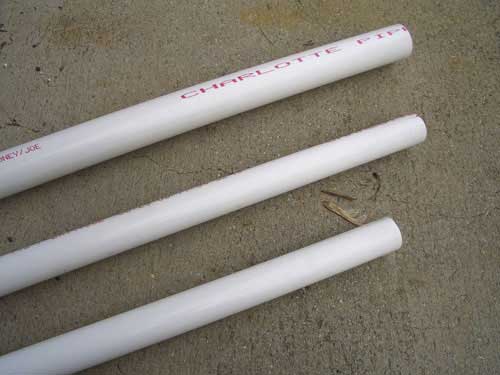
-PVC
-Pros
-Easily available and cheap
-Durable
-Light in weight
-Cons
-Hard to find in smaller sizes
-Most pieces are either straight or at right angles
-Hard to find desired angles for claw
-Wood
-Pros
-Easily shapeable
-Very easy to find
-Easy to seal
-Cons
-Sealant can wear off
-Harder to connect to the power source
-Pros
-Easier to find varying shapes as opposed to pvc
-Light in weight
-Easy to use
-Cons
-Breaks more easily compared to pvc or metal
-PVC
-Pros
-Easily available and cheap
-Durable
-Light in weight
-Cons
-Hard to find in smaller sizes
-Most pieces are either straight or at right angles
-Hard to find desired angles for claw
-Wood
-Pros
-Easily shapeable
-Very easy to find
-Easy to seal
-Cons
-Sealant can wear off
-Harder to connect to the power source
 |
| PVC pipe http://www.poorvin.com/roo/flagpole/images/pvc.jpg |
 |
| An ROV with a plastic frame http://rovbob.files.wordpress.com/2010/04/plastic_crash_frame.jpg |

Subscribe to:
Posts (Atom)